When customers first contact me about hydraulic systems, they often ask a simple but important question — “What exactly is a hydraulic gear pump, and is it right for my machinery?”
I always explain that the gear pump is the heart of the hydraulic system, quietly driving power through precision and reliability.
A hydraulic gear pump is a positive-displacement pump that uses intermeshing gears to move hydraulic oil, generating flow and pressure in a hydraulic system. It converts mechanical energy from a motor or engine into hydraulic energy that powers machinery.
This design has been used for decades because it is simple, efficient, and dependable. Let’s explore how it works and how to decide if it’s the right choice for your machine.
How Do I Know if a Hydraulic Gear Pump Is the Right Type for My Machinery?
Choosing the right pump is often the first big decision in any hydraulic project. Many buyers wonder whether a gear pump can handle their system’s load, especially for excavators, loaders, or industrial equipment.
A hydraulic gear pump is the right choice when you need a compact, reliable, and cost-effective source of steady hydraulic flow for medium to high-pressure systems.
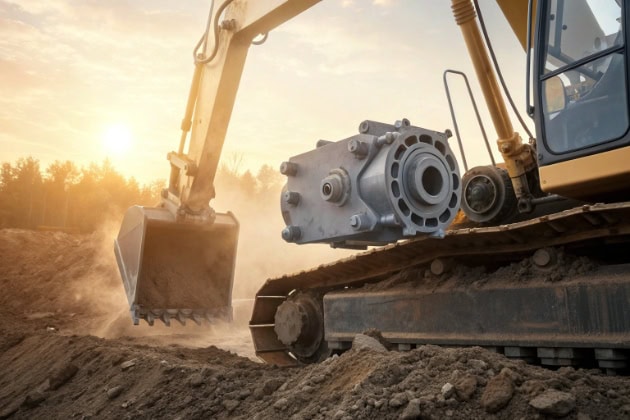
According to Hydraulic & Pneumatic Systems Engineering 1, gear pumps perform best in systems that demand constant flow rather than variable displacement. For example, they are ideal for:
- Excavators, loaders, and bulldozers
- Agricultural tractors and harvesters
- Forklifts and material-handling machines
- CNC and industrial automation systems
- Forestry and marine equipment
If your system requires very high pressure (above 350 bar) or extremely fine variable control, piston pumps 2 may be a better choice. However, for most construction and agricultural applications, gear pumps deliver excellent performance with lower maintenance.
Comparison Overview
| Machinery Type | Recommended Pump Type | Why Choose a Gear Pump |
|---|---|---|
| Excavator | Gear Pump | Compact, stable flow, easy maintenance |
| Loader | Gear Pump | Good for medium pressure, low noise |
| CNC Machine | Gear Pump | Suitable for lubrication and fluid circulation |
| Industrial Press | Piston Pump | Requires variable control |
| Marine System | Gear Pump | Resistant to vibration and continuous duty |
The key is to match the pressure, flow rate, and duty cycle of your equipment with the pump’s rating. Gear pumps are especially efficient for long-term, continuous operation.
What Key Components Should I Check When Evaluating a Hydraulic Gear Pump?
When you evaluate a hydraulic gear pump, looking only at “pressure” and “flow” is not enough. The real performance depends on its internal construction and material quality.
The key components to check are the gears, housing, bearings, seals, and shaft — these determine efficiency, durability, and noise level.
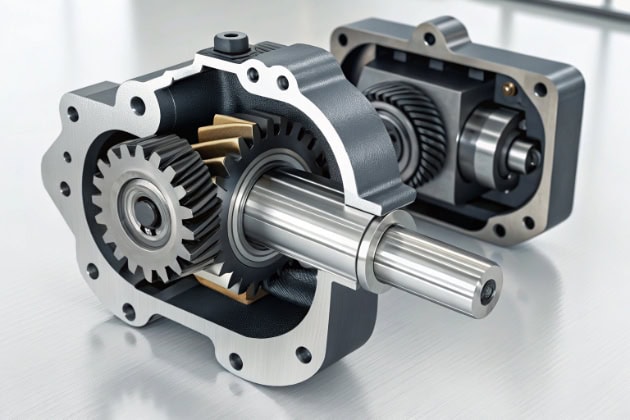
Each component plays a vital role:
- Gears: Transmit power and create flow. Should be precisely machined with tight tolerances.
- Housing: Holds gears in alignment. Common materials include aluminum, cast iron, and steel.
- Bearings: Support shafts and ensure smooth rotation under pressure.
- Shaft Seal: Prevents oil leakage at high speed and pressure.
- Side Plates / Pressure Plates: Maintain minimal internal leakage.
You can refer to Engineering360’s guide to gear pumps 3 for detailed explanations of component design and materials.
Example: Typical Gear Pump Construction
| Component | Material | Function |
|---|---|---|
| Gears | Steel or alloy | Traps and transfers hydraulic oil |
| Housing | Aluminum / Cast iron | Contains internal pressure |
| Shaft | Hardened steel | Transmits torque from motor |
| Seal | NBR / Viton | Prevents external leakage |
| Bearings | Bronze / Roller | Ensures low friction and stability |
When inspecting a pump, check for tight gear clearances, smooth rotation, and absence of noise or vibration.
High-quality pumps, like those adhering to ISO 4409 testing standards 4, maintain micron-level machining precision for long-term performance.
How Can I Compare a Hydraulic Gear Pump with Other Pump Types for My Project?
It’s common to compare gear pumps with piston or vane pumps when designing a hydraulic system. Each type has its strengths and trade-offs.
Hydraulic gear pumps are best known for simplicity, durability, and cost efficiency. Compared to piston and vane pumps, they are easier to maintain and perform well under stable operating conditions.
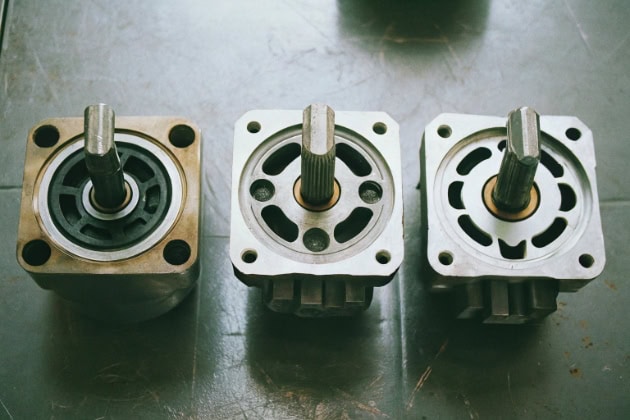
For a general overview, Hydraulic Technology Explained 5 provides comparisons of pump performance across categories.
Pump Type Comparison Table
| Pump Type | Pressure Range | Flow Control | Efficiency | Maintenance | Typical Use |
|---|---|---|---|---|---|
| Gear Pump | 150–300 bar | Fixed flow | Moderate–High | Low | Excavators, tractors, loaders |
| Piston Pump | 250–450 bar | Variable | Very High | High | Heavy-duty, industrial systems |
| Vane Pump | 100–200 bar | Moderate | Quiet & smooth | Medium | Machine tools, small systems |
Gear pumps provide steady flow at fixed displacement, perfect for systems using directional valves to control actuators.
For systems requiring energy savings or variable flow, variable displacement pumps 6 might be more suitable.
What Should I Look for to Confirm a Hydraulic Gear Pump Meets My Performance Needs?
Many buyers want to know how to confirm that a pump will actually meet their expected performance before purchasing or installing it.
To confirm a hydraulic gear pump meets your performance needs, check its rated pressure, displacement, speed range, and efficiency test data provided by the manufacturer.
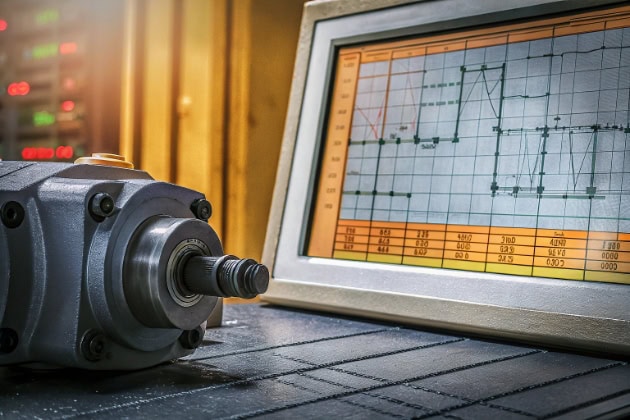
Consulting the manufacturer’s performance test reports 7 helps ensure the pump meets your system requirements.
Before selecting or testing a pump, consider the following:
- Rated Pressure: Should match your system’s operating load (e.g., 200–300 bar).
- Displacement: Determines how much oil is delivered per revolution (measured in cc/rev).
- Speed Range: Verify both minimum and maximum RPM limits.
- Efficiency Curve: Shows volumetric and mechanical efficiency.
- Noise Level: Important for mobile or indoor machinery.
Noise and vibration analysis, such as those described in Hydraulic System Diagnostics 8, can also provide insights into performance quality.
Example Performance Criteria
| Parameter | Typical Value | What It Means |
|---|---|---|
| Rated Pressure | 250 bar | Safe continuous working limit |
| Peak Pressure | 300 bar | Short-term overload capacity |
| Displacement | 10–60 cc/rev | Determines flow rate |
| Speed Range | 800–3000 rpm | Operation flexibility |
| Efficiency | 88–92% | Flow and energy performance |
Well-tested pumps follow ISO 9001 quality management systems 9 and verified CE marking standards 10 for international compliance and safety.
Conclusion
A hydraulic gear pump is the most practical, cost-efficient, and durable option for powering construction, industrial, and agricultural machinery.
By understanding its structure, key components, and performance indicators, you can confidently select the right pump — one that delivers steady hydraulic power and long-term reliability for your project.
Footnotes
1. Guide on selecting the right hydraulic pump for your machinery. ↩︎
2. Overview of hydraulic piston pumps and their advantages. ↩︎
3. Detailed explanation of gear pump components and operation. ↩︎
4. ISO 4409 defines hydraulic pump efficiency test methods. ↩︎
5. Comparison of pump types and applications in hydraulic systems. ↩︎
6. Key differences between variable and fixed displacement pumps. ↩︎
7. Reference on hydraulic pump performance and testing standards. ↩︎
8. Understanding noise and vibration diagnostics in hydraulics. ↩︎
9. ISO 9001 certification ensures consistent manufacturing quality. ↩︎
10. CE marking requirements for exporting hydraulic machinery. ↩︎